

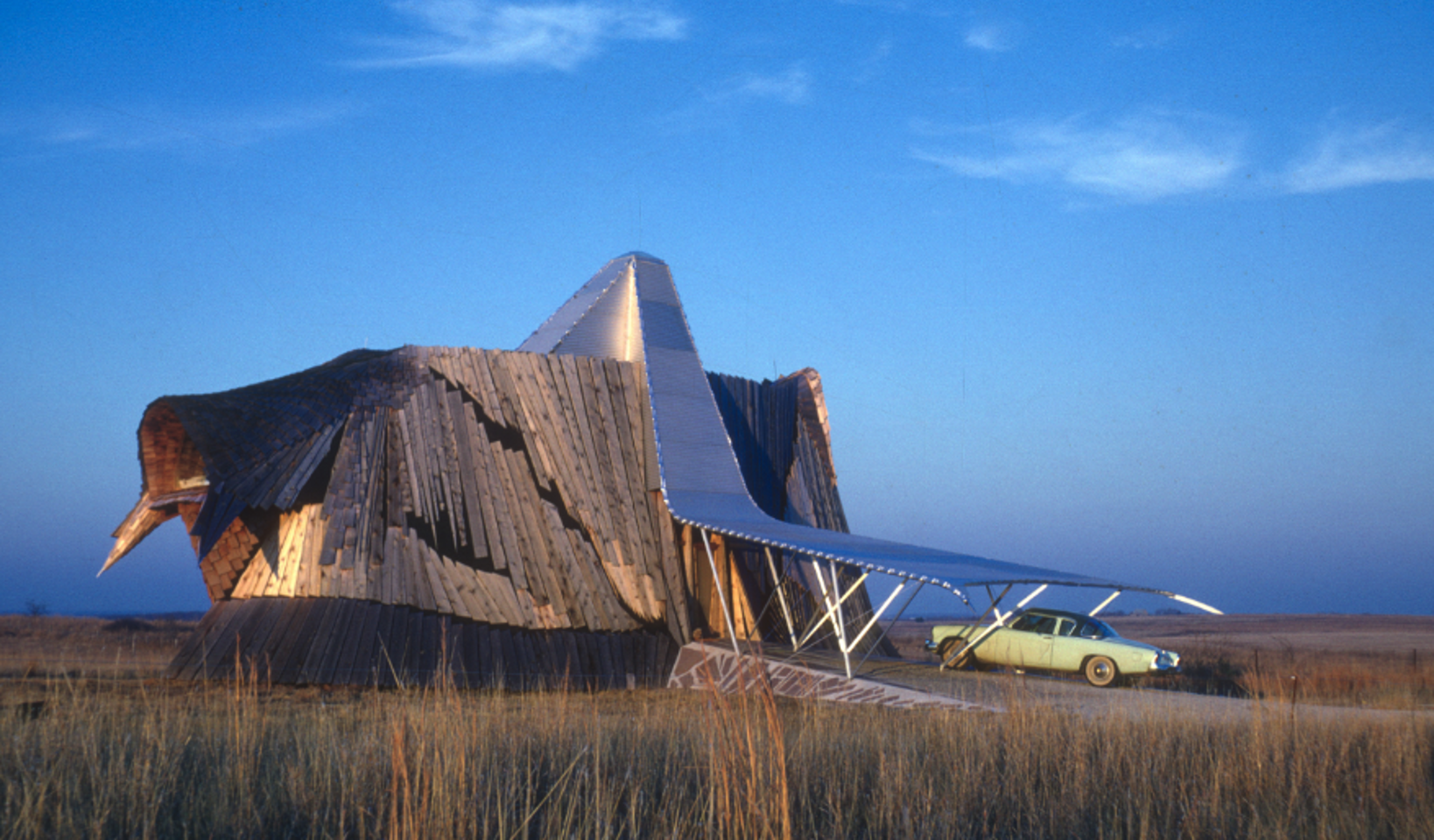
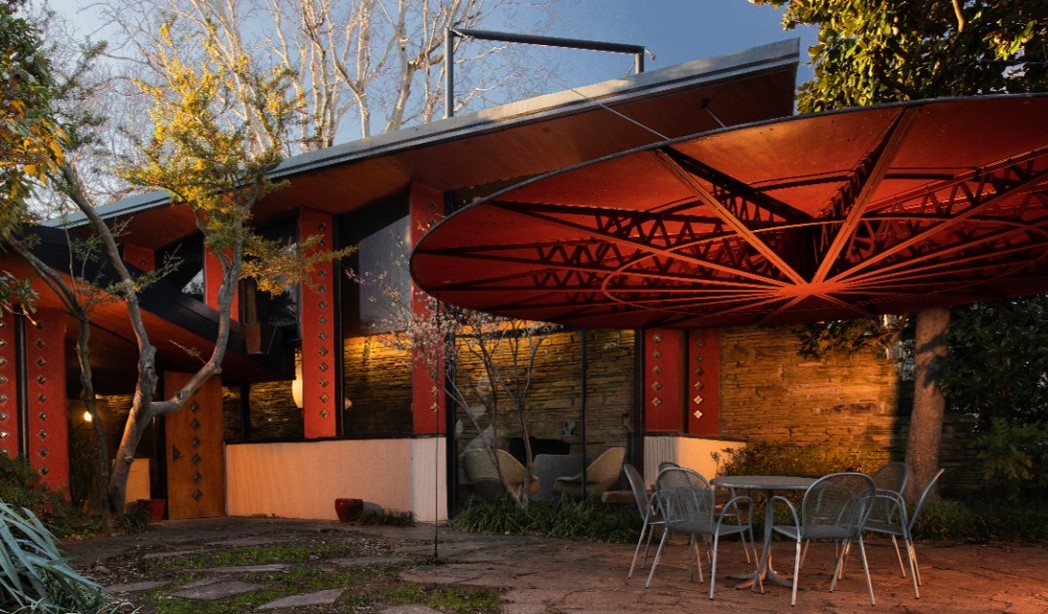
ONLINE EXHIBITION | Renegades: Bruce Goff and the American School of Architecture
Gibbs College by the Numbers
DesignIntelligence has named three Gibbs College design programs among the “Most Hired From,” most recently interior design and landscape architecture in 2019.
13 Gibbs College programs received STEM designations under the U.S. Department of Education’s CIP code system, allowing international grads 24 mos. of additional OPT training.
The Gibbs College of Architecture has been honored with a national award for its student journal, Telesis.
Five OU students have received the prestigious Newman Medal since 2011.
Gibbs College of Architecture faculty have partnered with the U.S. State Department on 6 Diplomacy Labs.
The IQC has hosted four placemaking conferences, drawing attendees from 60 counties and 14 states.
Architecture faculty Hans Butzer, FAIA and Stephanie Pilat have been recognized by Design Intelligence as “Most Admired” educators nationally.
Gibbs College students placed among the top teams in DBIA two years in a row!
The Institute for Quality Communities at Gibbs College has completed more than 50 community projects.
Interior Design students Jeason Li and Riham Hamed have been named among Metropolis Magazine’s Future 100.
Gibbs College students have recently earned four citations of merit for their historic preservation work.
Regional and City Planning graduate student Matthew McClure was recently named a Campus Compact Newman Civic Fellow.
Construction Science students have taken home more than 35 competition trophies in the past eleven years.
The Congress for New Urbanism listed the Placemaking Conference among its “Top 10 techniques for educating community leaders about placemaking.”
Three Landscape Architecture students recently received OKASLA Student Merit Awards.

Learn how Construction Science students built a greenhouse as part of their Design + Build course!
Create + Make

Learn how students and faculty helped design a village for 1500 orphaned children in Zambia.
Engage Communities

Learn about recent Gibbs College student internship experiences at top firms in Florida, Dallas, and OKC!
Land an Internship
Learn about a Gibbs College alumnus who is now co-owner of Homma Camp Company, a luxury camping service!
Start a Business
Learn about the workshop our faculty hosted with Jeffrey Mansfield, principal at MASS Design Group and director of MASS’s Deaf Space and Disability Justice Design Lab.
Empathy
See how students learn about diversifying cities and neighborhoods in the Division of Regional + City Planning!
Equity

See how students and faculty aid in peacemaking efforts in northern Uganda!
Civil Discourse
See how one alumnus stays connected to his values by supporting communities abroad.
Integrity
See how the Institute for Quality Communities is working with Oklahoma City’s Capitol Hill community to build a public plaza for the district!
Collaboration
See how Dr. Pai Liu is helping to build culturally sensitive healthcare environments.
Mutual Respect
Define your agency at Gibbs College.
Many questions are asked of us, but few more important than ‘what will you do?’ At the University of Oklahoma, we’re committed to helping you find your answer through world-class academics, top-flight facilities, and one-of-a-kind programs. What will you do to make an impact, benefit state and society, or change the world?
#IWill
“What will you do?” — a question that challenges passivity and demands a response. At the Christopher C. Gibbs College of Architecture, we’re tackling this question head-on to find the answers that will impact our state, society and the world.
#WeAre
The “We Are” campaign is a campus-wide movement organized by the Office of Diversity and Inclusion that is centered around our shared values of empathy, accountability, civil dialogue, collaboration, equity, integrity, and mutual respect.